Free-Standing vs Building-Supported Mezzanine Floors: Which Is Right for Your Business?
Installing a mezzanine floor is one of the most effective ways to increase usable space within an existing building. But before moving forward, it’s important to understand that not all mezzanine floors are designed in the same way.
Two of the most common options are free-standing mezzanine floors and building-supported mezzanine floors. Each offers different advantages depending on your building, how the space will be used, and your long-term plans.
Choosing the right solution ensures your mezzanine floor works not just for today, but for the future of your business.
Free-Standing vs Building-Supported Mezzanine Floors
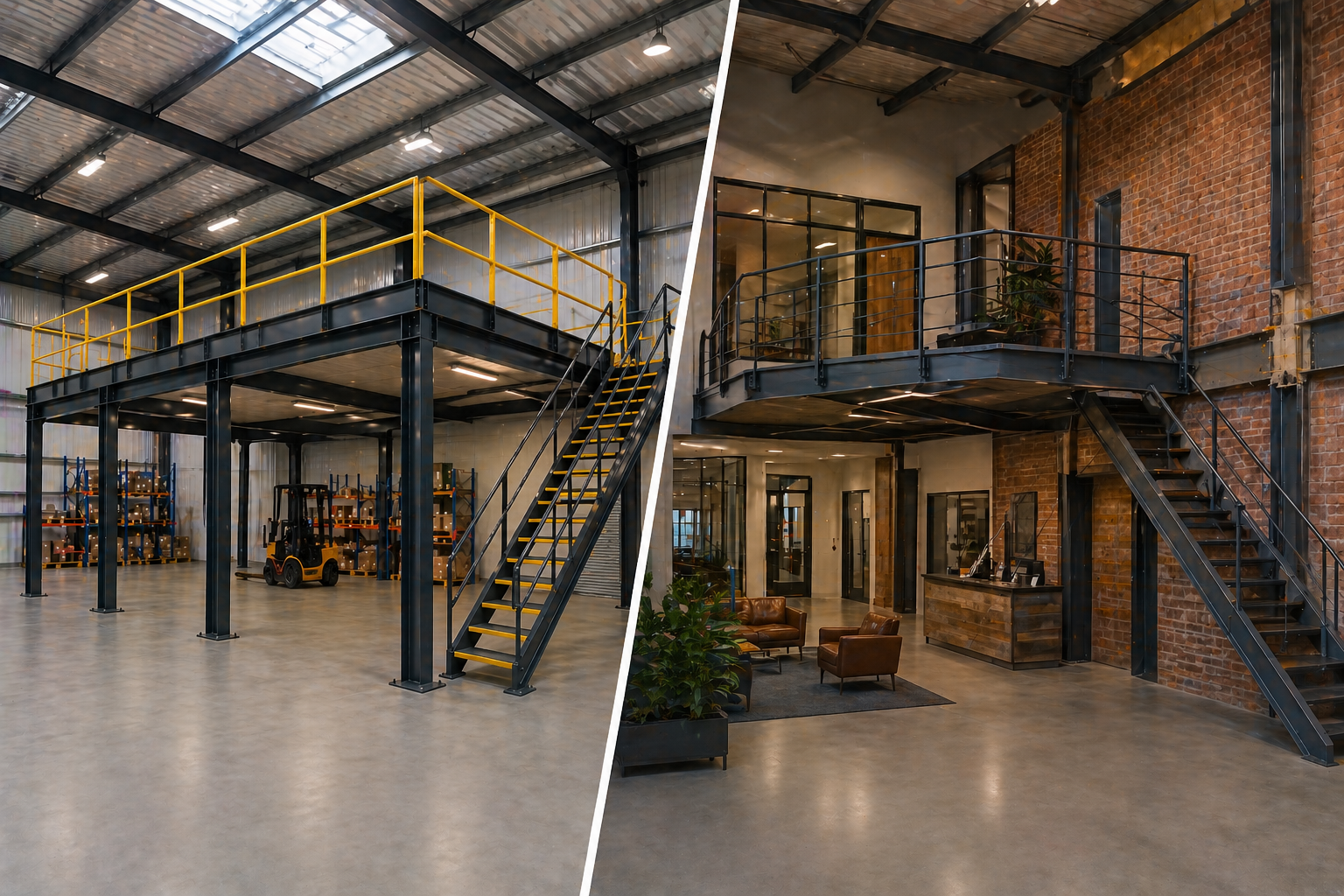
A free-standing mezzanine floor is a self-supporting structure that uses its own columns to transfer loads directly to the ground. A building-supported mezzanine floor, by contrast, relies partly on the existing building structure, such as walls or steelwork for support. The right choice depends on factors such as flexibility, building constraints, and how permanent the installation needs to be.
What Is a Free-Standing Mezzanine Floor?
A free-standing mezzanine floor is a self-contained structure that does not rely on the building’s existing framework.
It is supported entirely by its own steel columns and beams, making it independent of walls or other structural elements. This allows it to be installed in a wide range of buildings with minimal structural modification.
Free-standing mezzanines are often chosen for their flexibility, as they can be adapted, extended, or even relocated if required.
What Is a Building-Supported Mezzanine Floor?
A building-supported mezzanine floor is designed to work in conjunction with the existing structure of the building.
Rather than relying solely on its own columns, it may be partially supported by:
- Existing steel framework
- Load-bearing walls
- Structural elements within the building
This approach can reduce the number of columns required and create a more integrated layout, particularly in buildings that are structurally suitable.
Key Differences Between Free-Standing and Building-Supported Mezzanines
While both types achieve the same goal, creating additional floor space, the way they are supported leads to some important differences.
Flexibility
- Free-standing mezzanines offer greater flexibility and can often be modified or relocated
- Building-supported mezzanines are more fixed and designed as permanent solutions
Impact on the Building
- Free-standing systems place minimal reliance on the building
- Building-supported mezzanines require the structure to be suitable for additional loads
Column Layout
- Free-standing mezzanines typically use more columns to support the structure
- Building-supported mezzanines may reduce column requirements by using the building for support
Installation
- Free-standing mezzanines are often quicker to install with less structural work
- Building-supported mezzanines may require structural assessments and modifications
Long-Term Use
- Free-standing mezzanines are ideal for businesses that may relocate or reconfigure
- Building-supported mezzanines are better suited for long-term, fixed layouts
When to Choose a Free-Standing Mezzanine Floor
A free-standing mezzanine floor is often the best option when:
- You may relocate in the future
- Flexibility and adaptability are important
- The building cannot easily support additional structural loads
- You want minimal disruption during installation
This makes them particularly popular in leased buildings or fast-growing businesses.
When to Choose a Building-Supported Mezzanine Floor
A building-supported mezzanine floor may be more suitable when:
- The building structure is capable of supporting additional loads
- You want to minimise the number of support columns
- The mezzanine will be a permanent installation
- A more integrated layout is required
This option is often used in long-term facilities where the layout is unlikely to change.
Cost Considerations
The cost of a mezzanine floor depends on several factors, including size, load requirements, and complexity.
In general:
- Free-standing mezzanines can be more straightforward and cost-effective to install
- Building-supported mezzanines may involve additional engineering and structural work
However, the right decision should always be based on long-term value rather than initial cost alone.
Choosing the Right Mezzanine for Your Business
There is no one-size-fits-all solution when it comes to mezzanine floors.
The right option depends on:
- Your building’s structure
- How the space will be used
- Your future plans
- Operational requirements
A well-designed mezzanine should not only solve current space challenges but also support future growth.
A Solution Built Around Your Needs
At Doity Engineering, we design and install bespoke mezzanine floors tailored to each project.
Whether a free-standing or building-supported solution is the best fit, we ensure every mezzanine is safe, compliant, and designed around how your business operates.
Understanding your options is the first step towards making the right investment.
Frequently Asked Questions
What is the difference between free-standing and building-supported mezzanine floors?
Free-standing mezzanines support themselves using their own columns, while building-supported mezzanines rely partly on the existing building structure for support.
Which option is more flexible?
Free-standing mezzanine floors are generally more flexible, as they can often be modified, extended, or relocated.
Can all buildings support a building-supported mezzanine?
No. The building must be structurally capable of supporting the additional loads, which requires assessment by a qualified engineer.
Do building-supported mezzanines have fewer columns?
Yes. Because they use the building for support, they can often reduce the number of columns needed within the space.
Which mezzanine type is better?
Neither is universally better, the right choice depends on your building, usage, and long-term plans.