What Is a Free-Standing Mezzanine Floor?
A mezzanine floor is one of the most effective ways to increase usable space within an existing building. But not all mezzanines are designed in the same way.
One option that is becoming increasingly popular for warehouses and commercial environments is the free-standing mezzanine floor.
Unlike traditional mezzanine structures, a free-standing system offers greater flexibility, easier installation, and the ability to adapt as your business evolves.
What Is a Free-Standing Mezzanine Floor?
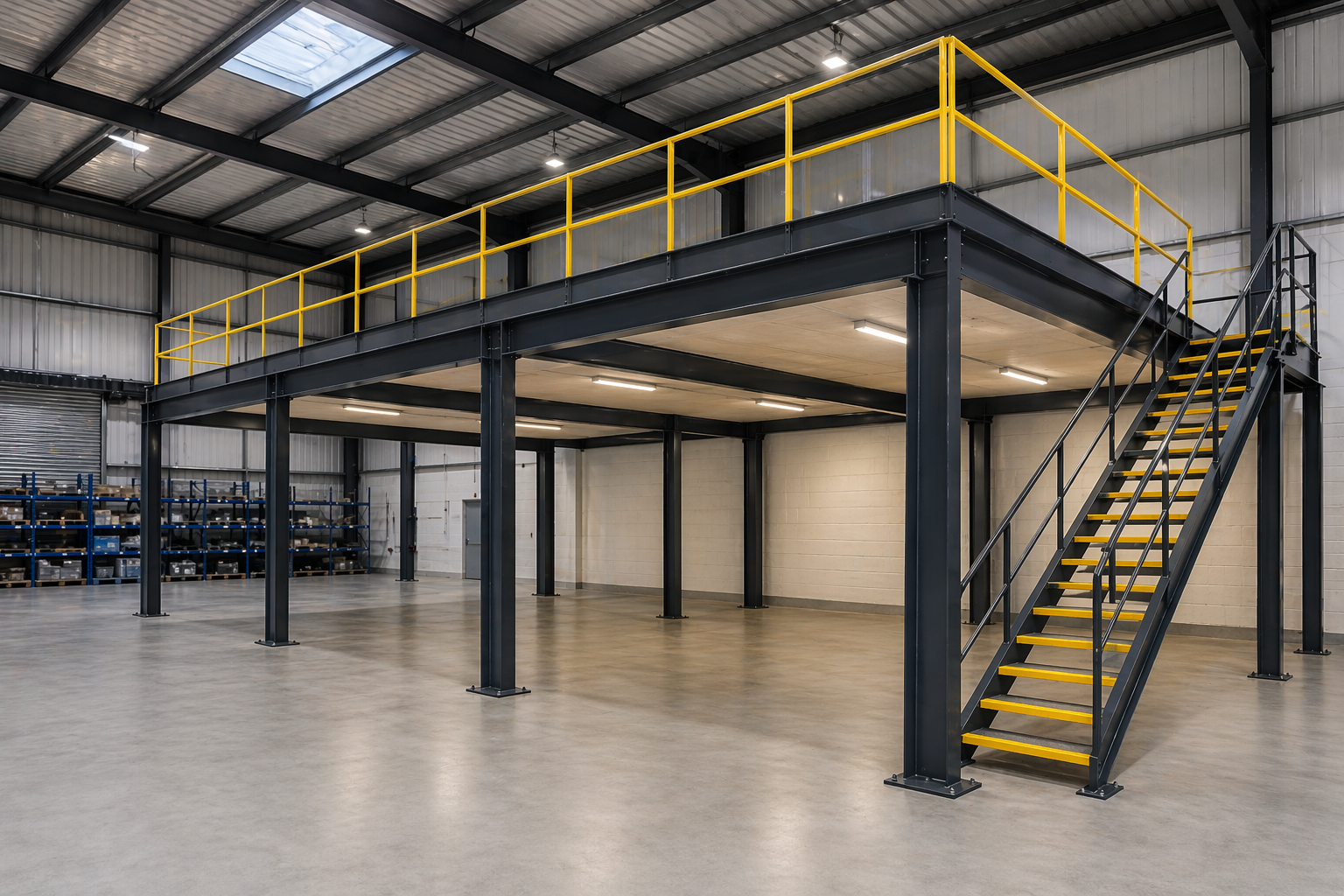
A free-standing mezzanine floor is a self-supporting structure that is independent of the building’s existing framework. It is designed with its own columns and supports, meaning it does not rely on the surrounding walls or structure for stability.
Because it is not fixed into the building, a free-standing mezzanine can often be installed, modified, or even relocated with minimal disruption.
This makes it an ideal solution for businesses that need flexibility or may move premises in the future.
How Does a Free-Standing Mezzanine Work?
A free-standing mezzanine floor is constructed using a structural steel framework supported by columns that transfer the load directly to the ground.
The design typically includes:
- Steel columns and beams
- Floor decking suitable for the intended use
- Access points such as staircases
- Safety features including handrails and guarding
Because the structure is self-contained, it can be installed within a wide range of buildings without relying on existing structural elements.
When Is a Free-Standing Mezzanine the Right Choice?
Free-standing mezzanine floors are particularly well suited to businesses that require flexibility and adaptability.
They are commonly used when:
The Building Structure Cannot Be Modified
Some buildings cannot easily support structural alterations. In these cases, a free-standing mezzanine provides a practical solution without placing additional load on the building.
Future Relocation Is Likely
If your business may move premises in the future, a free-standing mezzanine offers the advantage of being dismantled and reinstalled elsewhere.
Flexibility Is Required
Free-standing systems can often be extended, reconfigured, or adapted as operational needs change.
Minimal Disruption Is Important
Because the structure is independent, installation can often be carried out efficiently with minimal impact on ongoing operations.
Benefits of a Free-Standing Mezzanine Floor
Choosing a free-standing mezzanine floor offers several practical advantages.
Flexibility
The ability to modify or relocate the structure makes it a long-term solution that can adapt as your business grows.
Faster Installation
With no need for complex integration into the building structure, installation is often quicker and more straightforward.
Reduced Structural Impact
Because the mezzanine is self-supporting, it avoids placing additional stress on the building’s walls or framework.
Cost-Effective Expansion
A free-standing mezzanine provides additional space without the need for major building work or relocation.
Free-Standing vs Structural Mezzanine Floors
Understanding the difference between free-standing and structural mezzanine floors helps ensure you choose the right solution.
- Free-standing mezzanine floors are self-supporting and independent of the building
- Structural mezzanines are integrated into the building and may rely on existing structural elements
The right option depends on factors such as building constraints, long-term plans, and how the space will be used.
Is a Free-Standing Mezzanine Right for Your Business?
A free-standing mezzanine floor is a practical solution for many warehouses and commercial spaces, particularly where flexibility, speed of installation, and future adaptability are important.
However, every project is different. The best approach is to assess your building, operational needs, and long-term plans before deciding on the most suitable design.
Designed Around Your Requirements
At Doity Engineering, we design and install bespoke mezzanine floors tailored to each client’s specific requirements.
Whether you need a free-standing system for flexibility or a fully integrated structure, we ensure every mezzanine is safe, compliant, and built for long-term performance.
If you’re considering a mezzanine floor, understanding your options is the first step towards making the right investment.
Frequently Asked Questions
What is the difference between a free-standing and structural mezzanine floor?
A free-standing mezzanine floor is independent of the building structure and supports itself, while a structural mezzanine is integrated into and supported by the building.
Can a free-standing mezzanine floor be moved?
Yes. One of the key advantages of a free-standing mezzanine is that it can often be dismantled and reinstalled in a different location.
Are free-standing mezzanine floors safe?
Yes, when properly designed and installed, free-standing mezzanine floors are safe and built to meet all relevant building regulations and load requirements.
Do free-standing mezzanine floors require building regulations approval?
In most cases, yes. Mezzanine floors in the UK typically need to comply with building regulations relating to structure, fire safety, and access.
Where are free-standing mezzanine floors commonly used?
They are commonly used in warehouses, factories, and commercial buildings where additional space is needed without modifying the existing structure.